
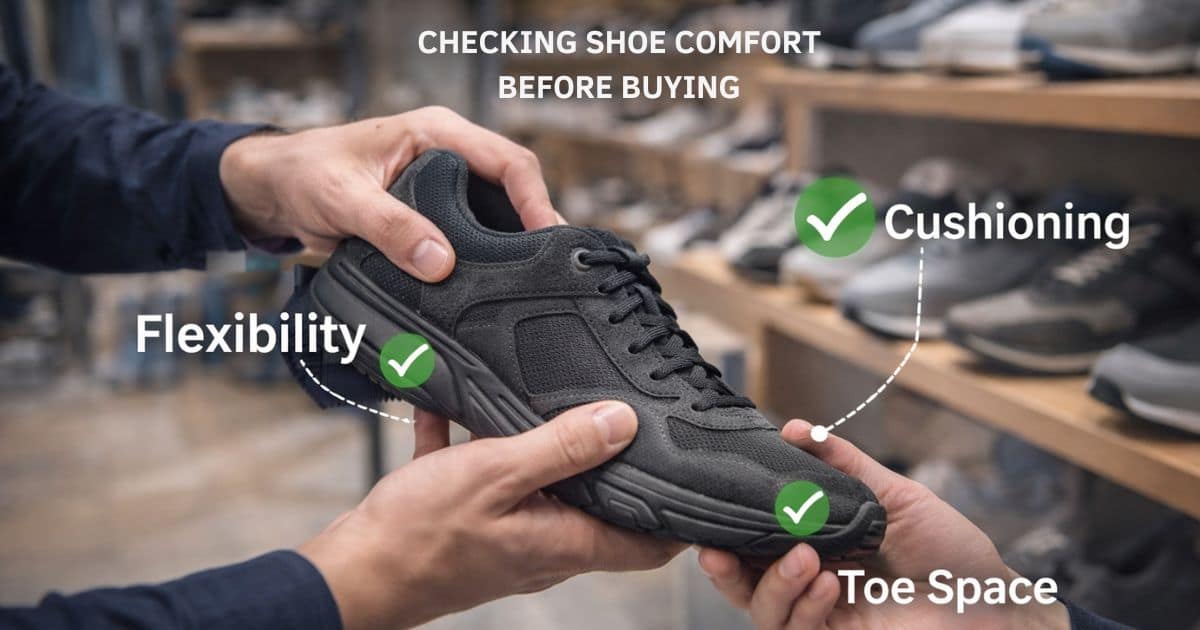
Buying shoes that look good is easy. Buying shoes that actually feel good after hours of wear is where most people get it wrong. Comfort isn’t something you should guess—it’s something you can evaluate before buying.
This guide explains how to identify comfortable shoes before you spend your money, using practical signs that apply to everyday wear.
Why First Impressions Matter
A common myth is that uncomfortable shoes will “break in” over time. In reality, shoes that feel wrong at first often stay that way.
Comfortable shoes should:
- Feel supportive from the first wear
- Not create pressure points
- Allow natural movement immediately
Minor stiffness is normal, but pain or tightness is not.
Check the Insole and Cushioning
The insole plays a major role in how a shoe feels throughout the day.
What to look for:
- Soft but responsive cushioning
- Insoles that return to shape after pressure
- Enough padding in the heel and forefoot
Flat or overly hard insoles usually lead to fatigue, especially during long days.
Pay Attention to Arch Support
Good arch support helps distribute weight evenly and reduces strain on the feet, knees, and lower back.
Signs of proper support:
- The shoe feels balanced when standing
- Your foot doesn’t collapse inward
- No excessive pressure in the middle of the foot
Support should feel natural, not forced.
Flexibility Is Key
A comfortable shoe should bend where your foot naturally bends—near the ball of the foot.
Quick test:
- Gently bend the shoe with your hands
- It should flex smoothly, not feel rigid like a board
Overly stiff shoes often restrict movement and cause discomfort over time.
The Toe Box Test
Toe space is one of the most overlooked comfort factors.
Make sure:
- Your toes can move freely
- The front doesn’t pinch or taper too sharply
- There’s space to accommodate slight swelling during the day
A tight toe box is a common cause of foot pain.
Breathability and Materials
Feet heat up during daily wear. Breathable materials help keep shoes comfortable for longer periods.
Look for:
- Mesh or perforated uppers
- Soft linings that reduce friction
- Materials that don’t trap heat
Better airflow means less moisture, less odor, and better comfort.
Weight and Balance
Heavier shoes can cause fatigue faster, especially if you walk or stand a lot.
Comfortable everyday shoes usually:
- Feel light but stable
- Don’t pull the foot backward or forward
- Feel evenly weighted when walking
Balance matters just as much as weight.
Red Flags to Avoid
Avoid shoes that:
- Feel uncomfortable right away
- Rely on “breaking in” as a selling point
- Are overly narrow or stiff
- Prioritize looks over structure
Comfort should never be an afterthought.
Final Thoughts
Knowing whether a shoe is comfortable before buying it comes down to paying attention to fit, support, flexibility, and materials. Shoes designed for real life should support your feet from day one—not after weeks of wear.
For a broader foundation on choosing the right footwear, start with our Men’s Shoes Buying Guide and explore how comfort, fit, and lifestyle work together.
Leave a Reply